
Category Archives: Uncategorized

Blocked Gutters in Perth? How Regular Cleaning Prevents Leaks, Rust & Costly Repairs

Is Your Perth Home at Risk from Blocked Gutters?
Perth’s unique climate—intense summer storms followed by dry, dusty autumns—creates the perfect storm for gutter problems. When leaves, twigs, and debris clog your gutters, water can’t flow freely. The result? Overflowing water, rusted fittings, sagging gutters, and potentially thousands of dollars in preventable roof and foundation damage.
If you’re a Perth homeowner asking, “Do I really need gutter cleaning?”—the short answer is yes. Here’s why regular maintenance isn’t just optional; it’s essential protection for your biggest asset.
3 Hidden Dangers of Ignoring Blocked Gutters in Perth
🔹 1. Water Damage & Interior Leaks
When gutters overflow, water pools around your roofline and seeps into eaves, ceilings, and walls. Perth’s heavy winter rains can turn a minor blockage into major interior damage overnight. Signs to watch for:

Water stains on ceilings or walls
Peeling paint near roof edges
Musty smells in attic spaces

🔹 2. Rust, Corrosion & Structural Decay
Perth’s coastal air carries salt moisture that accelerates metal corrosion. When debris traps water in gutters, rust forms faster—compromising gutter integrity. Left unchecked, rust spreads to fascias, roof sheets, and even structural timber, leading to costly replacements.
🔹 3. Foundation & Landscape Erosion
Overflowing gutters dump large volumes of water directly against your home’s foundation. Over time, this saturates soil, causes cracking, and undermines structural stability. You may also notice:

Eroded garden beds near downpipes
Puddles that won’t drain after rain
Cracks in driveways or paths near the house

Why Perth Homes Need Seasonal Gutter Care
Unlike cooler climates, Perth’s seasonal shifts demand proactive gutter maintenance:
✅ Autumn (March–May): Falling leaves from jarrah, marri, and pine trees create rapid buildup. Best time for post-summer clean.
✅ Winter (June–Aug): Peak rainfall tests gutter capacity. Ensure downpipes are clear before storms hit.
✅ Spring (Sept–Nov): Seed pods and blossoms add new debris. Ideal for inspection and minor repairs.
✅ Summer (Dec–Feb): Dry heat can warp damaged gutters. Check for rust or sagging after winter.
Pro Tip: Schedule professional gutter cleaning twice yearly—late autumn and early spring—to stay ahead of Perth’s weather patterns.
DIY vs. Professional Gutter Cleaning: What Perth Homeowners Should Know
While a ladder and gloves might seem enough, professional gutter services offer critical advantages:
DIY Cleaning

Professional Service (Cain Roofing)
Risk of falls or injury

Fully insured, safety-certified technicians
Miss hidden damage (rust, cracks, loose brackets)

Comprehensive inspection + repair recommendations
Temporary fix; debris returns quickly

High-pressure flush + gutter guard advice for longer protection
No warranty on work

Satisfaction guarantee + local Perth expertise
For multi-story homes, steep roofs, or properties with mature trees, professional cleaning isn’t just safer—it’s smarter.
Protect Your Perth Home: 3 Steps to Gutter Peace of Mind

Book a Professional Inspection
Cain Roofing offers free, no-obligation gutter assessments across Perth metro. We identify blockages, rust spots, and alignment issues before they escalate.
Consider Gutter Guards
Reduce future buildup with mesh or foam guards designed for Perth’s native foliage. We’ll help you choose the right type for your roof style.
Schedule Bi-Annual Maintenance
Set calendar reminders for autumn and spring cleans. Consistency prevents emergency call-outs during storm season.

Don’t Wait for a Leak—Act Before Perth’s Next Storm
Blocked gutters are a silent threat to Perth homes. But with proactive care, you can avoid costly repairs, preserve your property value, and enjoy peace of mind year-round.
📞 Ready to protect your home?
Contact Cain Roofing today for expert gutter cleaning, repair, and replacement services across Perth. Locally trusted, fully insured, and committed to keeping your roof watertight—season after season.
roof-replacement

Is Your Perth Roof Due for Repair or Replacement? Find Out Now!

Roof Repair or Replacement in Perth: What Your Roof Is Really Telling You

Suppose this tiny water stain on your ceiling isn’t what it looks like. What if this small stain is actually the first sign of a bigger issue? What if the cracked roof tile you spotted this summer isn’t silently letting water into your attic every time strong winds hit Perth?

If you are unsure whether your home requires roof repair or roof replacement, you are not alone. Many homeowners ignore early warning signs because everything appears fine from the outside. In reality, roofs deteriorate gradually, and recognising the stage early can save thousands.

This is where many people go wrong. They judge the roof from the driveway. If it does not look dramatic, they assume everything is fine. However, some of the most expensive problems are hidden beneath the surface—under ridge caps, flashing, valleys, and aged roofing materials.

Many homes appear perfectly sound from the street but have moisture damage beneath.

The warning signs you should not ignore

Before making a decision, take a step back and assess the full condition of your roof. Often, roofs provide early warning signs.

  • Water stains on ceilings or walls
  • Loose, cracked, or missing tiles
  • Rust spots on metal roofing
  • Sagging sections or uneven roof lines
  • Recurring leaks after rain
  • Mouldy smells in the roof cavity
  • Lifting flashing near vents or chimneys
  • Uneven gutter overflow

The key question is: Is the issue isolated or widespread?

This determines whether you need a simple repair or a larger structural solution.

Roof repair vs roof replacement: What’s right for your Perth home?

The answer depends on roof age, material condition, and extent of damage.

When a targeted repair makes sense

  • Minor tile damage
  • Localised flashing issues
  • A single identifiable leak
  • Small rust patches
  • Recent storm damage

Early repairs help prevent internal damage such as ceiling stains and timber deterioration.

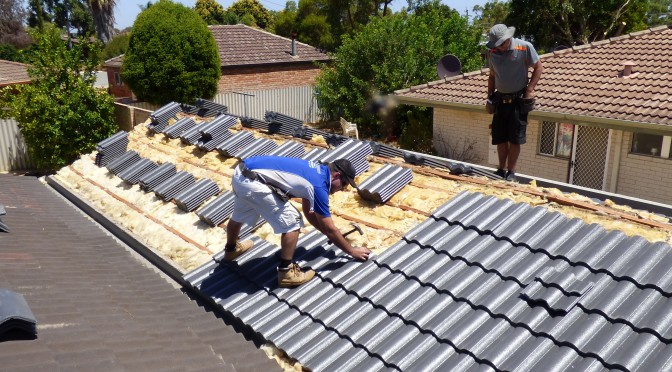
When a full roof replacement is the better option

  • Leaks appearing in multiple areas
  • Roof nearing end of lifespan
  • Widespread rust or cracking
  • Repeated temporary fixes
  • Poor energy efficiency or outdated materials

A replacement may cost more upfront but offers long-term reliability and peace of mind.

Why Perth roofs wear out differently

Perth homes face intense sun, coastal air, and strong winter storms. These conditions accelerate wear and tear.

Properties near the coast often experience faster corrosion, while poor drainage can lead to early damage in valleys and edges.

Local climate plays a major role in how quickly your roof deteriorates.

A practical tip most blogs skip

Inspect your ceiling after the first autumn rainfall, not in winter. Early storms often reveal hidden issues before major damage occurs.

Age matters, but history matters more

A well-maintained roof can last longer than expected, while a poorly repaired one may fail early.

Ask yourself:

  • Have leaks occurred multiple times?
  • Have different sections been patched over time?
  • Has the entire roof system been inspected?
  • Are you repeatedly fixing the same issue?

If yes, it may be time to consider a long-term solution.

How to judge cost the smart way

Do not focus only on the cheapest quote. Consider long-term value.

When a repair is cost-effective

  • Roof is generally in good condition
  • Problem source is clear
  • Materials still have lifespan left

When replacement offers better value

  • Damage affects multiple areas
  • Several components are failing
  • You plan to stay long-term

The better question is not “Can it be fixed?” but “Will it still make sense in a year?”

What a proper roof inspection should include

  • External surface condition
  • Flashing, ridge caps, and valleys
  • Structural movement or sagging
  • Internal moisture signs
  • Drainage and gutter performance
  • Previous repair work

A professional should explain everything in clear, simple terms without pressure.

Should you wait?

Small issues rarely stay small. Water can spread, causing hidden structural damage, mould, and insulation problems.

If you are unsure whether your roof will handle the next storm, that uncertainty is your sign to act.

The best next step for Perth homeowners

You do not need to guess or take risks. Start with a professional roof assessment.

Whether you need a minor repair or a full replacement, the right solution depends on the overall condition of your roof.

For an honest and reliable assessment, contact Cain Roofing Perth. Their team provides clear advice, practical solutions, and helps you make the right decision for your home and budget.

Roof-repairs

Roof Leak Repairs

Why Is My Roof Leaking? 9 Common Causes in Perth

A leaking roof is something Perth homeowners should never ignore. What starts as a small water stain on the ceiling can develop into damaged insulation, mould, deteriorated building materials and expensive repairs if water continues entering the property.

But why do roofs leak?

The cause isn’t always obvious. A leak may come from a damaged roof tile, worn flashing, blocked gutters, deteriorated roof components or storm damage. In some cases, water can travel from one part of the roof before appearing inside the home, making the original source difficult to find.

Here are nine common causes of roof leaks and what Perth homeowners should look out for.

1. Cracked or Broken Roof Tiles

Roof tiles are exposed to Perth’s weather throughout the year. Strong winds, falling branches, hail and general ageing can cause tiles to crack, break or move out of position.

Even a small damaged section can allow rainwater underneath the roof covering.

If you notice cracked, missing or displaced tiles, it’s worth arranging a professional roof inspection rather than waiting for the next heavy downpour.

2. Damaged or Deteriorated Ridge Capping

Ridge capping protects the highest points of a tiled roof. Over time, the bedding and pointing around ridge caps can deteriorate.

Gaps or cracks may allow water to enter during heavy rain, particularly when wind drives rain across the roof.

Replacing or repairing damaged ridge capping can help restore the roof’s weather protection.

3. Worn or Damaged Roof Flashing

Flashing is installed around areas where different roof surfaces or structures meet, including chimneys, valleys and other roof penetrations.

When flashing becomes damaged, loose or deteriorated, water can find its way underneath the surrounding roofing materials.

Because flashing problems aren’t always visible from inside the home, professional leak detection can help identify where water is entering.

4. Blocked Gutters and Downpipes

Your roof drainage system needs to move rainwater away from the roof efficiently.

Leaves, dirt and other debris can restrict gutters and downpipes. When water cannot drain properly, it may overflow and reach areas that aren’t designed to handle continuous moisture.

Regular gutter maintenance can therefore play an important role in preventing water-related roof problems.

5. Storm and Wind Damage

Severe weather can cause sudden roof damage.

Strong winds may move tiles, while falling branches or hail can damage roofing materials. Heavy rainfall can then expose these weaknesses and result in water entering the property.

After a significant storm, check for obvious signs such as missing tiles, damaged gutters or visible debris. Avoid climbing onto the roof yourself, particularly when surfaces are wet.

6. Ageing Roof Materials

No roof remains in perfect condition forever.

Roofing materials, sealants, flashing, pointing and other components can gradually deteriorate through exposure to weather.

An older roof may therefore develop several smaller problems at once. Regular inspections can help identify deterioration before it develops into a major leak.

7. Damaged Roof Sheeting or Insulation

For properties with metal roofing or other sheet-based roofing systems, damaged or deteriorated sections can allow moisture into the roof space.

Water entering through damaged areas can affect insulation and other materials beneath the roof.

The visible water stain inside your home may therefore be some distance from the actual point where the water entered.

8. Poorly Sealed Roof Penetrations

Roofs contain various penetrations for vents, pipes, skylights and other fixtures.

If the surrounding seals deteriorate or the installation becomes damaged, water can enter around these points.

These leaks can sometimes be difficult to identify because water may travel along roofing materials before becoming visible inside the property.

9. Neglected Minor Roof Damage

One of the biggest problems with roof leaks is allowing a small issue to remain unresolved.

A slightly damaged tile or small gap may not appear serious during dry weather. Once heavy rain arrives, however, that small weakness can become an active leak.

Addressing minor damage early can help reduce the possibility of more extensive water damage

What Are the Warning Signs of a Roof Leak?

You don’t always see water dripping from the ceiling when a roof has a problem.

Look out for:

  • Brown or yellow ceiling stains
  • Damp patches on walls or ceilings
  • Peeling paint
  • Musty smells
  • Damp insulation
  • Dripping water during rain
  • Mould or mildew
  • Visible roof damage
  • Water pooling in the roof space

If these signs appear, don’t assume the problem will disappear when the weather clears. The source of the moisture should be investigated.

Why Is Professional Roof Leak Detection Important?

Finding the source of a roof leak can be more complicated than finding the water stain.

Water can travel underneath roofing materials, insulation and other parts of the roof structure before becoming visible inside the property. This means repairing the location where you see water may not solve the original problem.

Professional roof leak detection in Perth can help identify the source so the appropriate repair can be carried out.

Cain Roofing’s roof leak service includes leak detection, waterproofing, tile replacement, sheeting and insulation repair, gutter and downpipe repairs, and replacement of damaged or ageing roof components.

What Should You Do If Your Roof Starts Leaking?

If you notice water entering your home during rain, take action as soon as possible.

First, protect the affected area

Move furniture and belongings away from the water and use suitable containers to catch dripping water.

Avoid climbing onto the roof

A wet roof can be extremely dangerous. Attempting to locate a leak yourself can also result in accidental damage to roofing materials.

Arrange a professional inspection

A qualified roofer can assess the roof and investigate the likely source of the leak.

For urgent situations, the service page states that Cain Roofing provides 24/7 emergency roof leak repairs and can install a temporary tarpaulin when necessary to help prevent further water entering the affected area.

Don’t Ignore a Leaking Roof

A roof leak rarely improves simply because the rain stops. The underlying problem can remain and become worse during the next storm.

Whether the cause is a broken tile, damaged flashing, blocked drainage, deteriorated materials or storm damage, identifying the problem early gives you a better opportunity to address it before more of the property is affected.

If you suspect a leak, consider professional roof leak repairs in Perth to identify the cause and determine the appropriate repair.

Need urgent help? Cain Roofing lists 24/7 emergency roof leak repair and serves Perth-wide.